
Neurodiversity and Disability
Neurodiversity
The range of difference in individual brain function and behavioural traits. It can include:
- Psychological or neurological disabilities
- Mental health disorders
- Different thought-to-execution pathways such as left-handed coordination or dysphasia
- Different stimulus-to-thought pathways such as dyslexia or auditory processing difficulty
- Acquired brain injuries
It is estimated that approximately 15-20% of Australians experience Neurodivergence.
People who are neurodivergent and learn that it means they’re different — not sick or defective — are more likely to be happier and aim higher in their careers than those who stigmatise it.
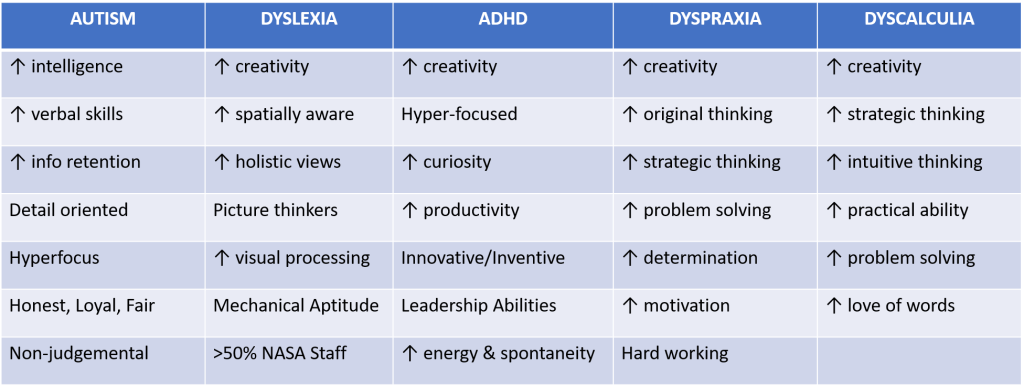
It can be a combination of traits that are seen as both strengths and challenges.
Many neurodiverse groups can display common positive characteristics. (See Table 1)
Often times society, and people with symptoms themselves, can fear negative stigmas.
Diagnoses and labels can often result in emotional conflicts within us, such as:
- Shame and disappointment
- Sense of loss or desiring to be Neurotypical
- Feeling validated in our experiences and challenges
- Relief, being able to understand what influences some of our behaviours/thoughts
- Fear or confidence about handling the future

 Lee Wong Counselling